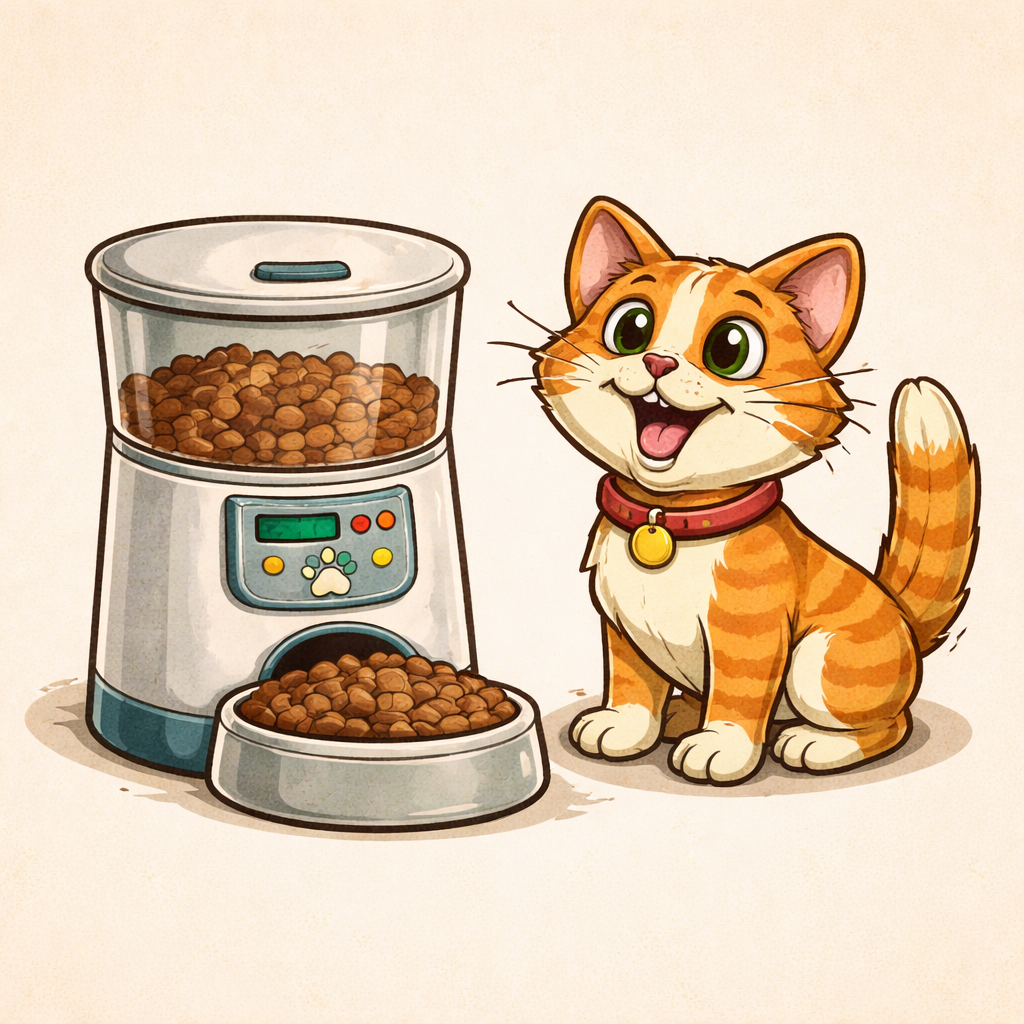
When you own a cat, one of the main responsibilities is to ensure that they are well-fed. However, it can be challenging to stick to a consistent feeding schedule, especially if you have a busy lifestyle. This is where an automatic cat feeder comes in handy.
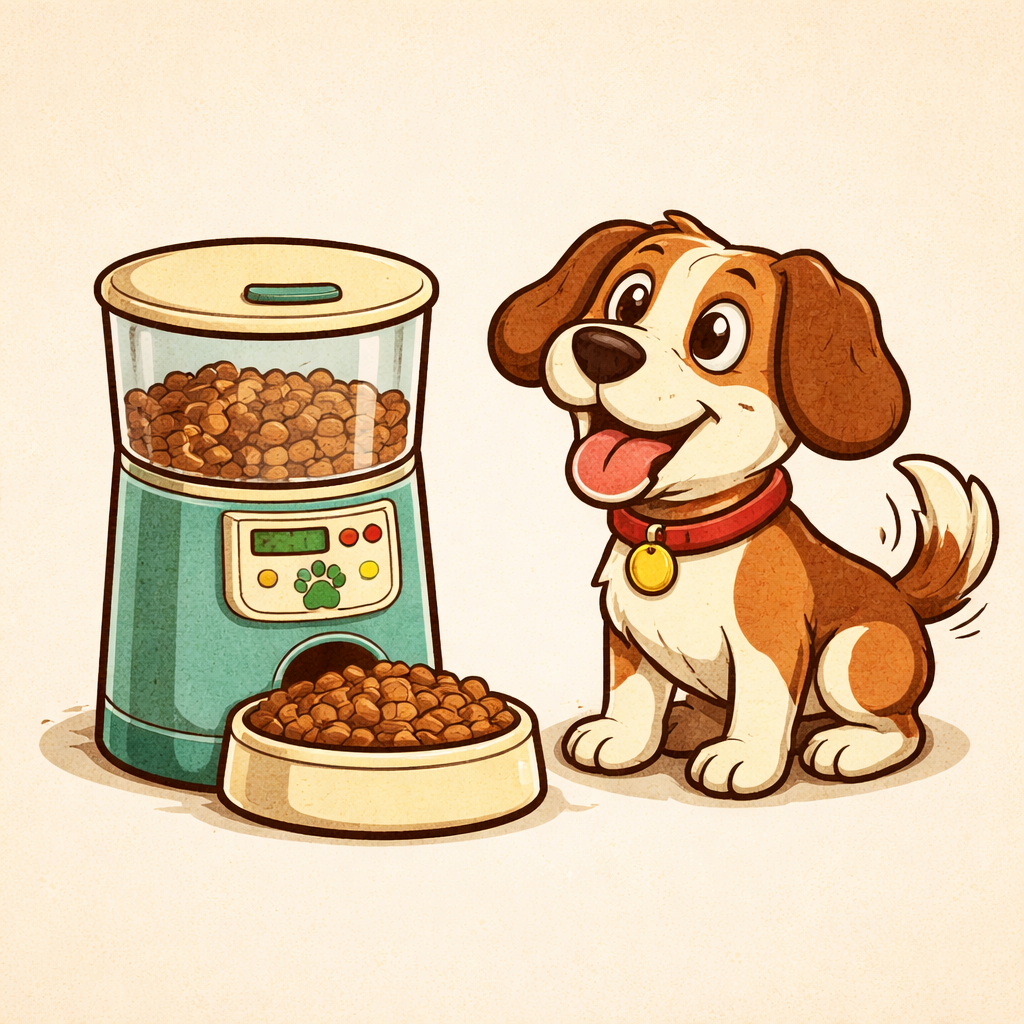
An automatic cat feeder is a convenient device designed to automatically dispense food to your cat on a set schedule, even when you’re not home. It helps ensure consistent mealtimes, prevents overfeeding, and can be especially useful for pet owners with busy or unpredictable routine.
Personal Experience:
I have used Automatic Cat Feeders for several years now. I love them so much that I have 3 of them, one for each cat. They make it so that I only need to check the food level about once every two, to three, weeks – freeing up my schedule!
Automatic Feeders are a fantastic part of my group of everyday robots to help automate my life.

Types of Feeders:
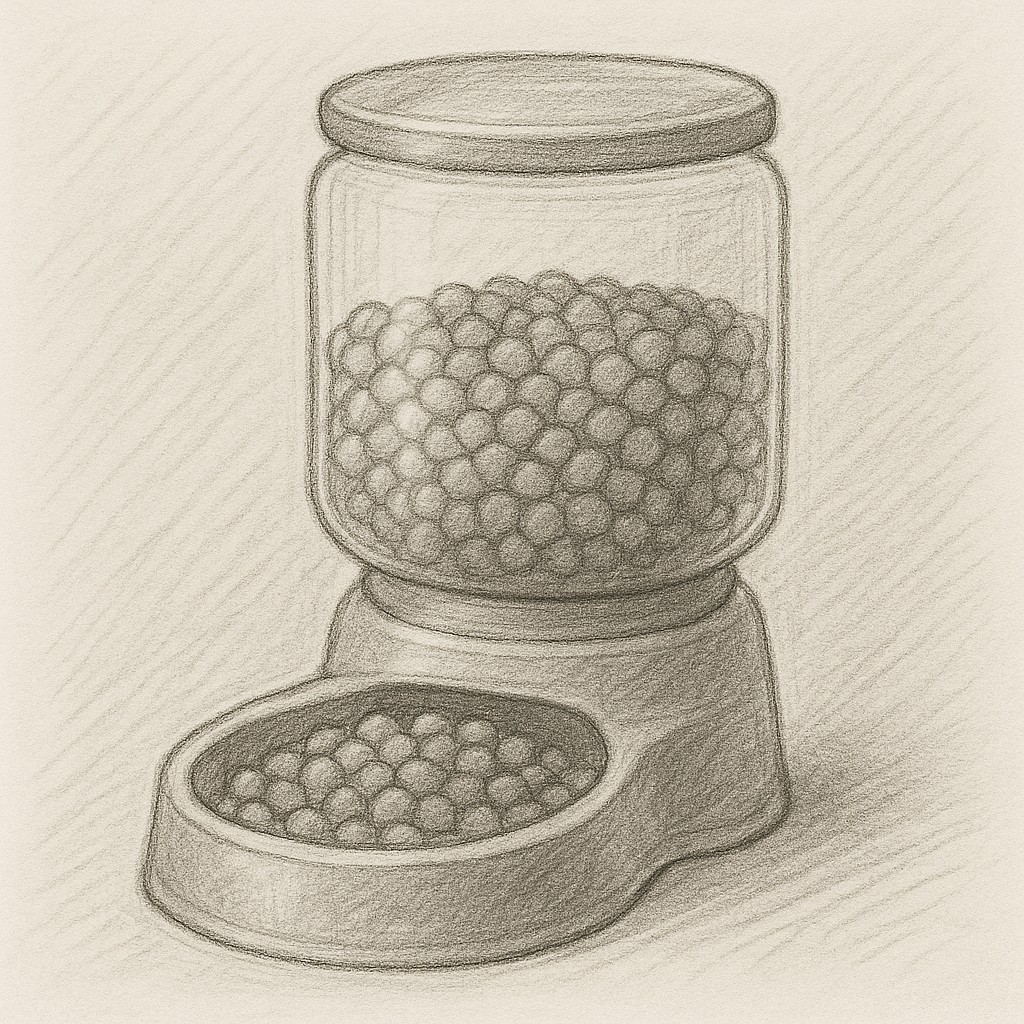
There are two types of feeders: Gravity & Mechanical Feeders. Both are “Automatic” but there are some huge differences between the two types.
Gravity Feeders:
Gravity feeders are the most basic type of automatic cat feeder, where food is dispensed by gravity as your cat eats from the bowl. They are simple and affordable but do not offer many features a Mechanical Feeder offers, such as:
- Cannot program times to dispence food.
- Cannot control meal portion size.
These can contribute to weight gain and are not the type I prefer.
Basic Mechanical Feeders:
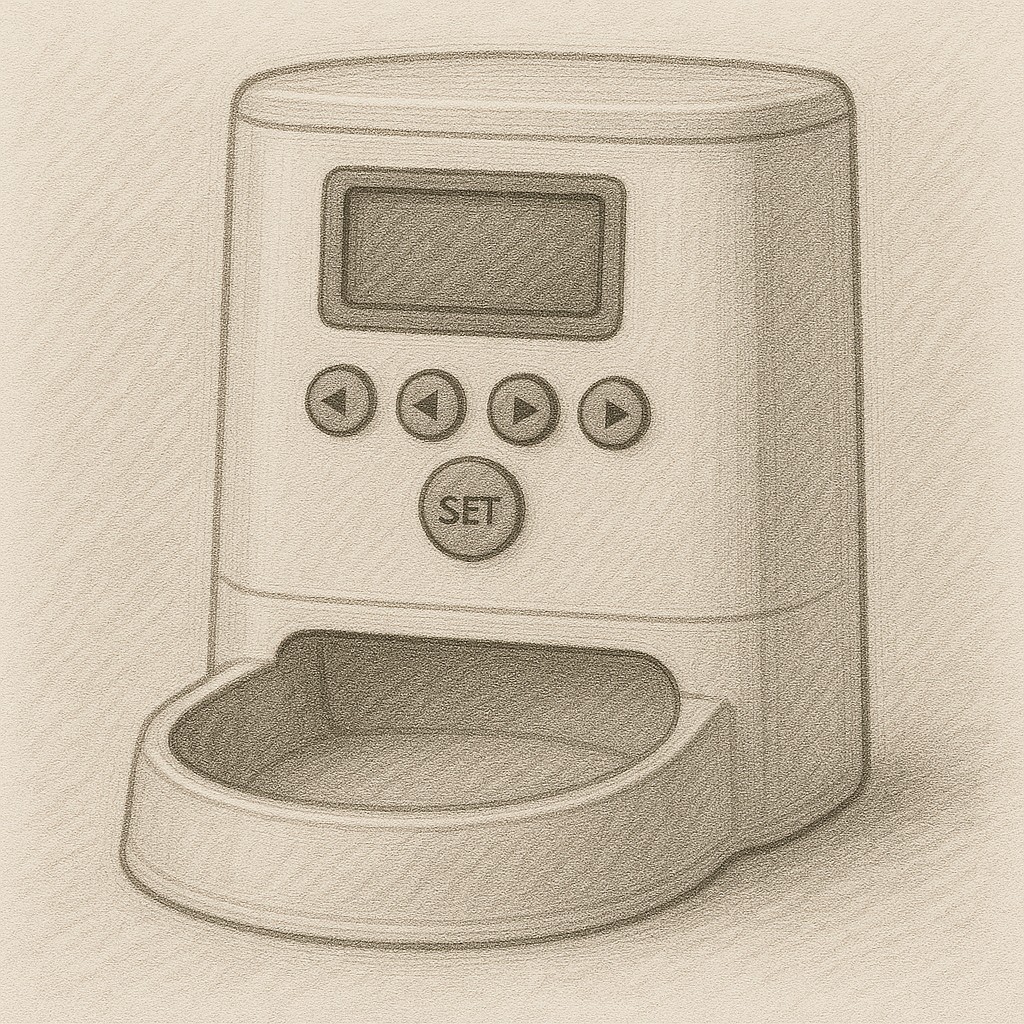
Mechanical Feeders are Motorized Feeders which require power to spin gears that release a controlled portion of food and can have a lot of advanced features. In this article when I say Automatic Feeder I am referring to the Motorized Feeder. Basic Automatic Feeders provide:
- Control Meal Portion Sizes.
- Set and Automate Mealtimes.
These benefits allow pet owners to feed their pets while not even at home and help control their weight without needed to worry about missing any meals.
Basic Auto Feeders do not have built in batteries so while the power is out they will not dispense food and can miss meals while the power is out. Once the power is restored then the feeder will continue future meal times.
Advanced Automatic Feeder Features:
While basic automatic feeders cover the essentials—like scheduled feedings and portion control—advanced models take pet care to the next level with a range of smart features designed for convenience, peace of mind, and customization.
These enhanced feeders include everything a basic model offers, plus several high-tech additions:
Phone App Integration: Many advanced feeders can connect to your smartphone, allowing you to remotely control feeding schedules, portion sizes, and monitor your pet’s meals in real time—from anywhere in the world.
Built-in Camera: With a live video feed, you can check in visually to see your pet, confirm that food was dispensed, and ensure your furry friend is doing well even when you’re away.
Collar Activation: Some feeders use RFID technology to detect a specific pet’s collar. This ensures food is dispensed only when the right pet is nearby, helping in multi-pet households where portion control and food stealing can be an issue.
Two-Way Intercom: With a microphone and speaker system built into the feeder, you can talk to your pet through the app. It’s a great way to soothe anxious pets or call them to the bowl during feeding time.
Battery Backup: To prevent interruptions in feeding schedules during power outages, many advanced feeders include a battery backup system. This ensures your pet doesn’t miss a meal even when the electricity goes out.
Wet Food Support (limited): A few high-end models are capable of handling wet food, though they typically require refrigerated compartments and more maintenance. This article focuses on dry food feeders, so wet-food models won’t be covered in detail here.
While these added features provide impressive flexibility and functionality, they do come at a higher price. Advanced feeders can be significantly more expensive than basic models, so it’s important to consider which features are essential for your lifestyle and your pet’s needs.

Have Multiple Pets?
If there is any competition or aggression over access to the feeder, it may be necessary to separate pets during meal times or use two (or more) feeders that dispense food at the same time so that the animals may be in different rooms during feeding time.
If your pets get along and can eat in the same location you may find an automatic feeder that has two bowls. This allows the owner to only need one feeder for 2 pets. This is dependent on your individual situation.
Setting Up and Maintaining the Automatic Cat Feeder:
Once you have chosen and purchased the right automatic cat feeder for your pet, it’s important to properly set it up and maintain it. Here are some key steps to follow:
- Carefully read the instructions provided by the manufacturer before assembling and setting up the feeder.
- Choose a designated area for the feeder that is easily accessible for your cat but also away from other pets or high-traffic areas in your home.
- Follow the programming instructions to set up a feeding schedule that works best for your pet.
- Regularly clean and disinfect the feeder according to the manufacturer’s recommendations to prevent bacterial growth.
- Monitor your cat’s food intake and adjust portion sizes as needed based on their activity levels and dietary needs.
By following these steps, you can ensure that your automatic cat feeder functions properly and provides your pet with the right amount of food at the right time. With proper care and maintenance, your automatic cat feeder can last for years to come, making it a worthwhile investment for both you and your feline companion. So, choose wisely and give your pet the best feeding experience possible.
Conclusion:
In conclusion, automatic cat feeders can be a valuable tool for pet owners looking to provide their feline companions with consistent, portion-controlled meals. By choosing the right feeder and properly setting it up and maintaining it, you can ensure that your cat stays healthy and well-fed even when you’re not at home.
Subscribe to Our Newsletter!
Stay up to date with new books, AI & Robot News, and more!
Subscribing is treated seperate from Customer Accounts.

About Projects with Jackie!
As the Family Nerd, my goal is to help non-techie people learn, and find, the tech that they need. We do this by providing as much information as we can from a Nerdy standpoint. This includes common issues seen with family and friends.